


Our Year 7 students recently completed a physics unit on Earth and Space Sciences. During this time, students were required to create an engaging product aimed to communicate their understanding of the Earth’s natural resources and energy sources. Our Year 7 Science Teachers were so impressed and proud of these creative products, that these are now on display in the Science cabinets in the Centenary Building.
Thank you to the students from Miss Nicole Kellam’s Year 7D Science class and Ms Deb Daly’s Science 7F for writing the following accounts:
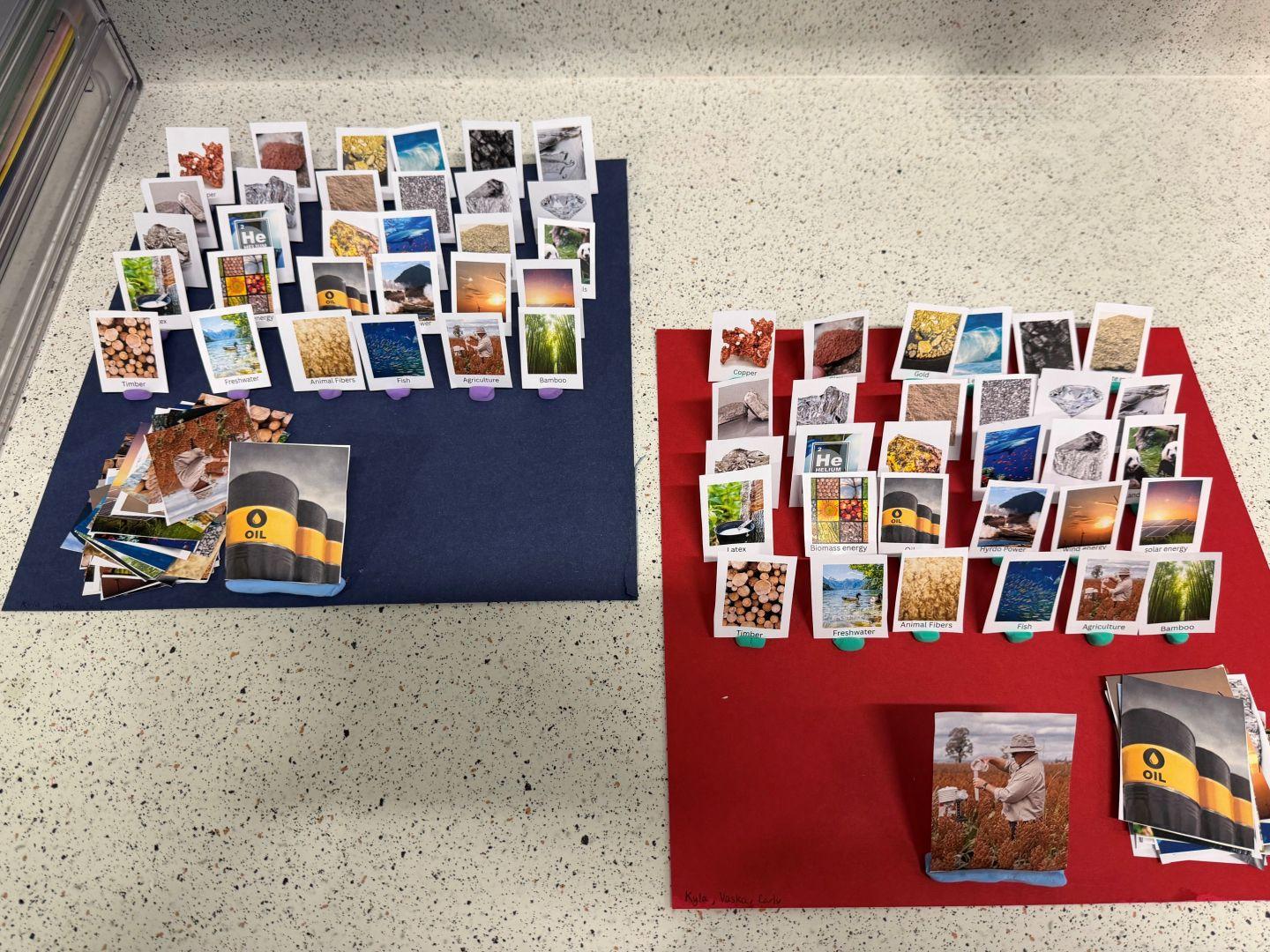
Guess Who - Natural and Unnatural Resources Edition
The highlight of this Science assessment task was that we got to create a version of our favourite childhood board game that also reflected our learning in a unique way. It was fun to mould the air-dry clay, create the face cards using examples of both natural and artificial resources and work together as a team.
Carly W, Vaska N, and Kyla D (7D)
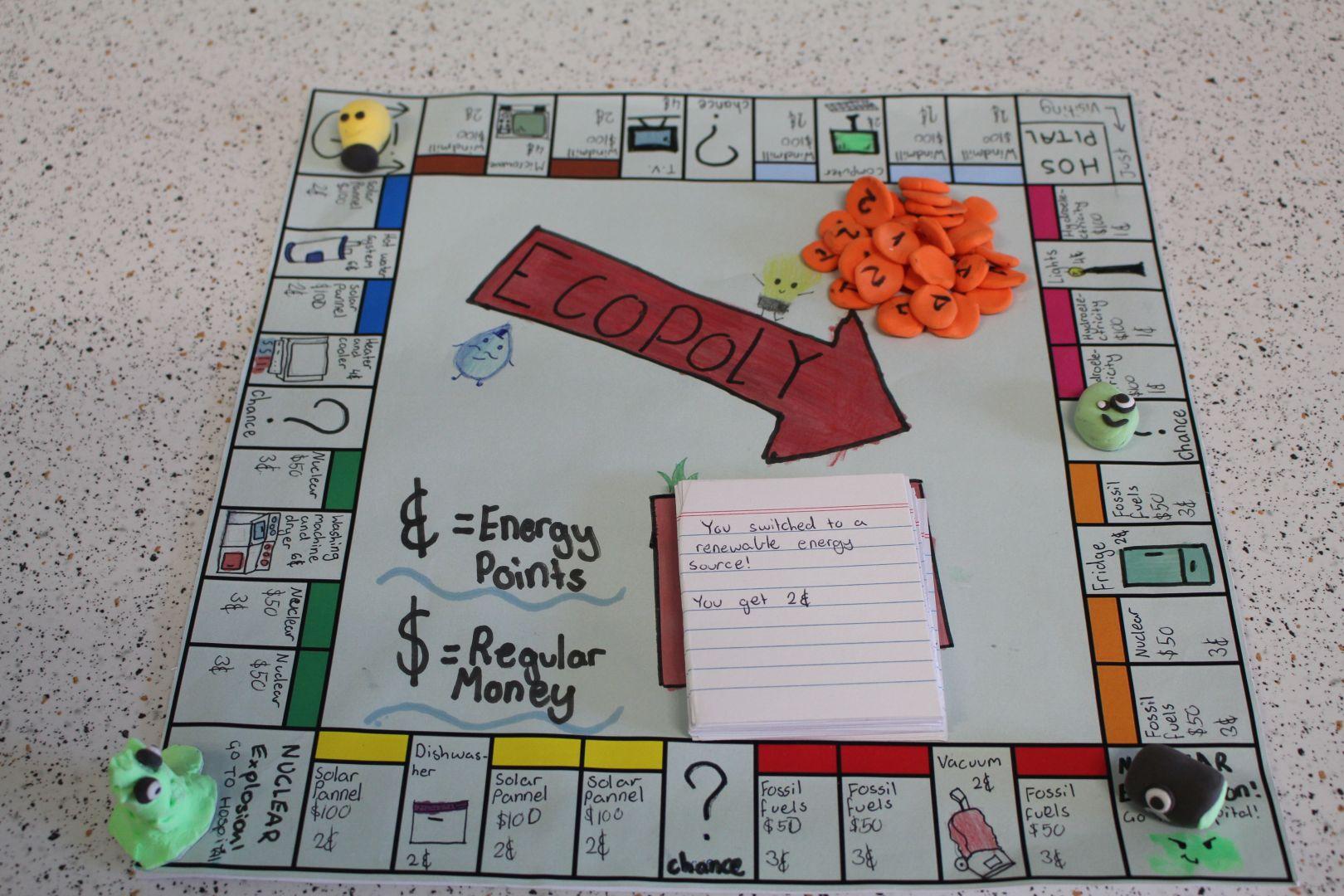
ECOPOLY - Renewability Monopoly
I was inspired to create this board game to teach people about renewable and non-renewable energy sources and why choosing sustainable energy is important for protecting our planet.
A highlight of our board game is learning about renewable energy while competing with friends, making strategic decisions and having fun along the way.
We probably enjoyed creating the pieces the most, from water droplets to a nuclear explosion figure. We also had fun designing the game itself, including our own twists to make it fun and enjoyable.
Hannah M (7F)
Bioluminescence
Ruby is one of our keen Year 7 Scientists in Miss Breanna Farrugia’s Science class. Ruby is enchanted with bioluminescence and created a website during her Digital Technology class on this remarkable chemical process. Her description below explains how this fascination started and teaches us a bit about this incredible phenomenon:
Since I was little, I have always loved science, especially anything related to biology. Marine life has always fascinated me. I first became interested in bioluminescence when I was 11. My cousins and I were on a holiday, and we were obsessed with trying to observe bioluminescence in the ocean. We visited different beaches looking at the weather and unusual disruptions in the water. One night we received a call from some friends at the beach and from the excitement in their voices we knew they had found some. So, my cousins and I ran down to the beach as fast as we could and saw the bright blue flash in the water where the waves crashed. It was so exciting. From that moment I was hooked.
Bioluminescence is produced by a microscopic organism that is classified as a type of algae. It is a single celled plankton that flashes a bright blue almost green colour when disturbed. Unlike what you would expect, bioluminescence is a chemical reaction of something called chemiluminescence which is an enzyme in the body. Many fish and jellyfish possess bioluminescence, such as the well-known Anglerfish and Comb Jellies. A couple of interesting fun facts about bioluminescence is that there are no living things that live in freshwater that possess this ability and bioluminescence is used in cancer research.
Ruby S (7B)
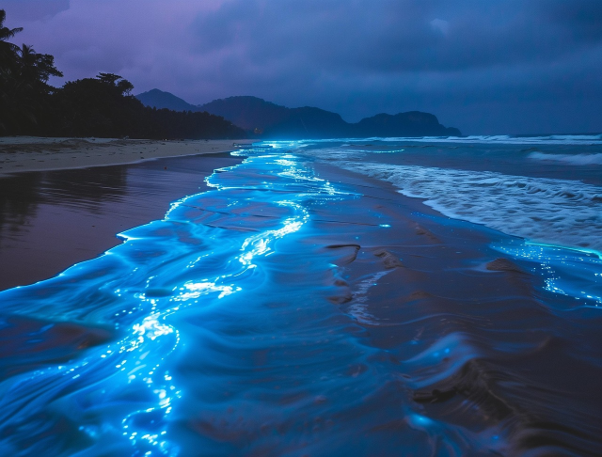
Image from: https://pixabay.com/illustrations/bioluminescence-ocean-beach-waves-8794192/