


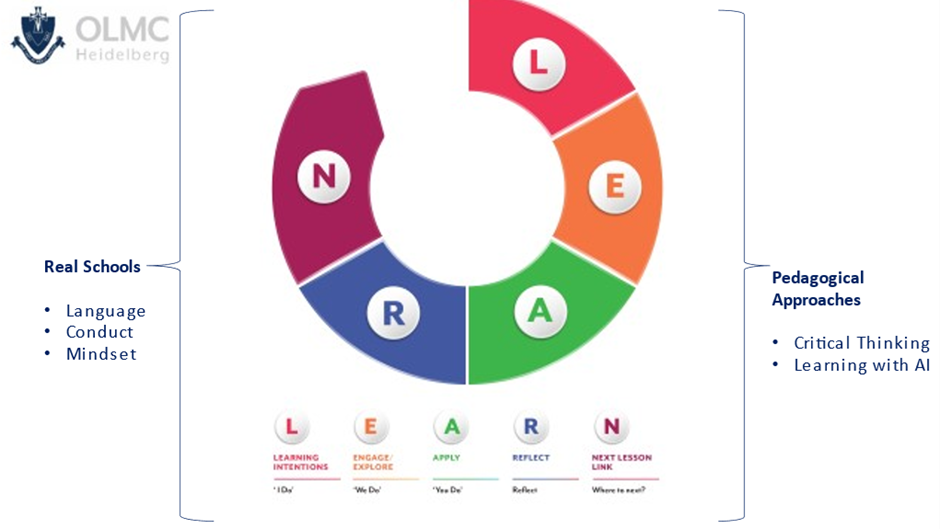
In the previous newsletter I indicated that the 2026 the College Professional Learning program for staff will continue to focus on embedding the OLMC Instructional Model and Real School’s routines. The OLMC Instructional Model is designed to engage learners and develop relationships by employing restorative language, conduct and mindsets designed to teach and model behaviour that supports student learning through positive relationships, and clear expectations for behaviour and learning.
One of the areas that the College has focused on is Entry Routines. An entry routine is a short, explicitly taught sequence that directs how students enter the classroom and begin learning. For example:
- Where students sit in a seating plan
- How quickly they begin learning
- Where the teacher positions themselves
- How expectations are reinforced
This also includes when and what technology is allowed. Students need to know when they are allowed to use their devices. The beginning of the lesson may include verbal or handwritten exercises where devices are not required. Students also need to know which digital tools are appropriate for certain learning tasks. There should be some type of explicit signal as to when and how much students can use their device for completing their classroom work.
From a learning perspective, entry routines matter because they protect attention and make learning possible from the very first minute. Entry routines help ensure that attention is directed to the right thing at the right time, before instruction begins. The research shows that:
- Students learn best when staff maintain consistent class routines.
- Structured routines help improve self-regulation, wellbeing, growth, and academic achievement.
- Predictable routines create a positive learning environment where students feel ready to engage.