OLMCBI 209

OLMC
Heidelberg
News

Edition 3 | 13 March 2026
Judith Weir
Principal

On Friday 6 March, we celebrated International Women’s Day with breakfast. Parents, students, past students and staff came together focused on the theme ‘Balance the Scales’. Angela Scaffidi AM, past student, Co-Chair of our College Advisory Council, Partner at Senate SHJ and board member of many organisations all focused on improving the lives of those in need. She is truly a woman of Mercy who gives herself whole heartedly to all that she supports.

Angela shared with us her story. She reminded us of the power of women who unite to support each other and the great things that are achieved when we choose to get involved. She spoke of lifelong friendships with women and the support they have offered her throughout our life. Angela also reminded us that courage doesn’t have to be loud, sometimes the most significant moments of courage happen quietly when we choose to do something new and maybe we are the only ones that knew of the courage it took. Angela also offered our students sage advice about being comfortable with where they are in life’s journey. She provided much food for thought about the ways in which we might contribute to ‘Balancing the Scales’.

This week, some very courageous fathers/male mentors of Year 8 students participated with students in the Time and Space program. I am always delighted watching the connections between adults and children and the genuine pride and joy in doing something together. The conversations were rich and joyful. As parents, we don’t always get moments where we are just focused on enriching our family relationships. It is a great privilege for OLMC to be able to make this opportunity available.

Next week, we will welcome the mothers/female mentors for our Year 7 students and anticipate that it will be another evening of rich conversation and joy.

As you are no doubt aware, since 2017, many organisations including schools, have been working with Child Safe Standards. In 2022, the standards were revised and we moved from seven to eleven standards in all. They cover a wide range of ways we can provide opportunities for student voice, empowerment and protection. They set the expectations for how young people are treated and can be supported. They also place the safety and wellbeing of all young people at the heart of all we do. They don’t just apply to schools, many organisations that work with children are also expected to work with the standards.

Many of our practices are informed by the standards and we are all becoming used to expectations such as signing in at schools, acknowledging Codes of Conduct and having Working with Children Checks. At OLMC, the safety and wellbeing of our students is taken very seriously and is at the forefront of our work. Working with the standards also offers us an opportunity to review practice, policy and procedures to further develop our responses.

At OLMC, one of our key Strategic Directions 2025-2029 is focusing on being a ‘Connected Community’. We are grateful to all our families for the support you provide and your continued partnership in helping us to learn, grow and develop as a student focused, safe and supportive community.

If you are interested in learning more about the standards you can connect on the link here.

This week, NAPLAN 2026 began for students in Years 7 and 9. As you are no doubt aware, due to technical issues beyond our control, the test was interrupted. I have included below information provided by the ACARA, the body responsible for the NAPLAN testing. Students at OLMC were well supported and have been able to resume the testing. The remainder of the testing will continue as planned.

‘As you may have been made aware, NAPLAN testing was impacted … by technical issues with the national assessment platform.

ACARA, the national body that oversees testing, has confirmed that testing resumed shortly after the initial incident.

ACARA recognises the significant impact to students disrupted during their NAPLAN writing assessments, and for that we apologise unreservedly.

Schools have been informed to continue NAPLAN testing as per their planned test schedules. ACARA will continue to work closely with states and territories to support students to complete their NAPLAN tests.

Measures are in place to ensure students are not disadvantaged as a result of this technical issue.

Should parents and carers have any further queries about the NAPLAN disruptions this morning, they should contact their child’s school in the first instance.' (ACARA)


Shane Taylor
Head of Faith and Mission

IWD: #BalanceTheScales for Gender Equality

With International Women's Day celebrated last week, we are invited to consider the courageous women in our lives who model and challenge our commitment to the dignity and value of all people worldwide. On Saturday 7 March, we celebrated the feast day of Perpetua and Felicity, who are listed in the Eucharistic Prayer No. 1. May the example and intercession of Sts Perpetua and Felicity, and of those living ‘saints’ in our community, guide our thoughts, words and actions.

Sts Perpetua and Felicity (c. 182–203 CE) - 7th March
Perpetua and Felicity were early Christian martyrs who died in Carthage in 203 CE during the persecution of Christians under the Roman emperor Septimius Severus. Perpetua was a young noblewoman and new mother, while Felicity was an enslaved woman who was also pregnant at the time of their arrest. Both were imprisoned because they refused to renounce their Christian faith. While in prison, Perpetua recorded parts of her experience in what became known as The Passion of Perpetua and Felicity, one of the earliest surviving writings by a Christian woman. Shortly before the day of execution, Felicity gave birth to a daughter. The two women remained steadfast in their faith and were eventually martyred in the arena. Their story has been remembered in the Christian tradition as a powerful witness to courage, faith, and solidarity across social divisions.

God, whose love and goodness gathers us in:
we pray for women all over the world,
especially those challenged by poverty and other injustices.
Stir us to know women’s dignity.
Quieten us so we can listen to women’s voices.
Awaken us to see women’s realities.
Strengthen us to stand for women’s rights.
Fill us with hope to make a better future together.
We make this prayer in God’s holy name.

Amen.

Prayer shared by Caritas Australia.

Image from https://www.catholic.org/saints

Shane Taylor
Head of Faith and Mission

Last week on Wednesday 4 March, the Year 7 students spent time together on their first OLMC Reflection Day. This special opportunity to move out of the classroom and have directed opportunities to consider themselves, their connections with others, and with God was a great blessing. There were many fun times in games and activities, as well as some quieter times of reflection and connection.

Sr Emma Llewellyn RSM
Leader Staff and Student Formation

In the previous edition of our newsletter, I highlighted the celebration of 180 years of Mercy in Australia. This year also marks the 175th anniversary of the establishment of St. John the Evangelist Catholic Parish, Heidelberg.

According to St. John’s Parish website: ‘In 1851, Bishop Gould formally established the Heidelberg Parish – then designated the Heidelberg Mission. Today, the beautiful bluestone church, designed by William Wardell, with its magnificent stained-glass window, continues to service our thriving parish of over 1000 families. In the early days, the parish boundaries extended as far as Lilydale, Healesville, Warburton and many nearby places, including Eltham, Hurstbridge, Bulleen, Yan Yean, Templestowe and Epping. Today’s parish includes the suburb of Heidelberg, and parts of Eaglemont, Heidelberg Heights, Ivanhoe and Rosanna. The foundation stone for the present church was laid by the Rev. Dr. Fitzpatrick, Vicar General, on 6 March 1859. It was blessed by Bishop O’Quinn of Brisbane on 14 April 1861 and dedicated to St John the Evangelist. In 2001, we celebrated the 150th year of our parish (affectionately known as St John’s on the Hill). St. John’s Primary School today stands on the site of the original weatherboard chapel, St. Monica’s, built in 1851.’

St. John’s is our closest neighbour - literally across the road on Cape Street - and one of our Catholic feeder primary schools. The current parish priest, Fr Vinh Nguyen, has also been appointed our College Chaplain and so may I take this opportunity to welcome Fr Vinh as a member of our OLMC community.

St. John’s will be celebrating 175 years in various ways throughout the year, as advertised in their 2026 Parish Calendar. Some events worth highlighting include:

  • 175th Anniversary Mass to be celebrated by the Most Reverend Peter A. Comensoli, Archbishop of Melbourne, on Sunday 3 May at 10.30 am, followed by a light luncheon in the hall
  • 175th Anniversary Gala Dinner on Friday 29 May at 7.00 pm in Ivanhoe Centre-Heidelberg Town Hall (ticketed event)
  • Thanksgiving Mass for the Sisters of Mercy on Sunday 13 September at 10.30 am, followed by morning tea

Our OLMC community looks forward to celebrating and deepening our relationship with St. John’s especially in this anniversary year.

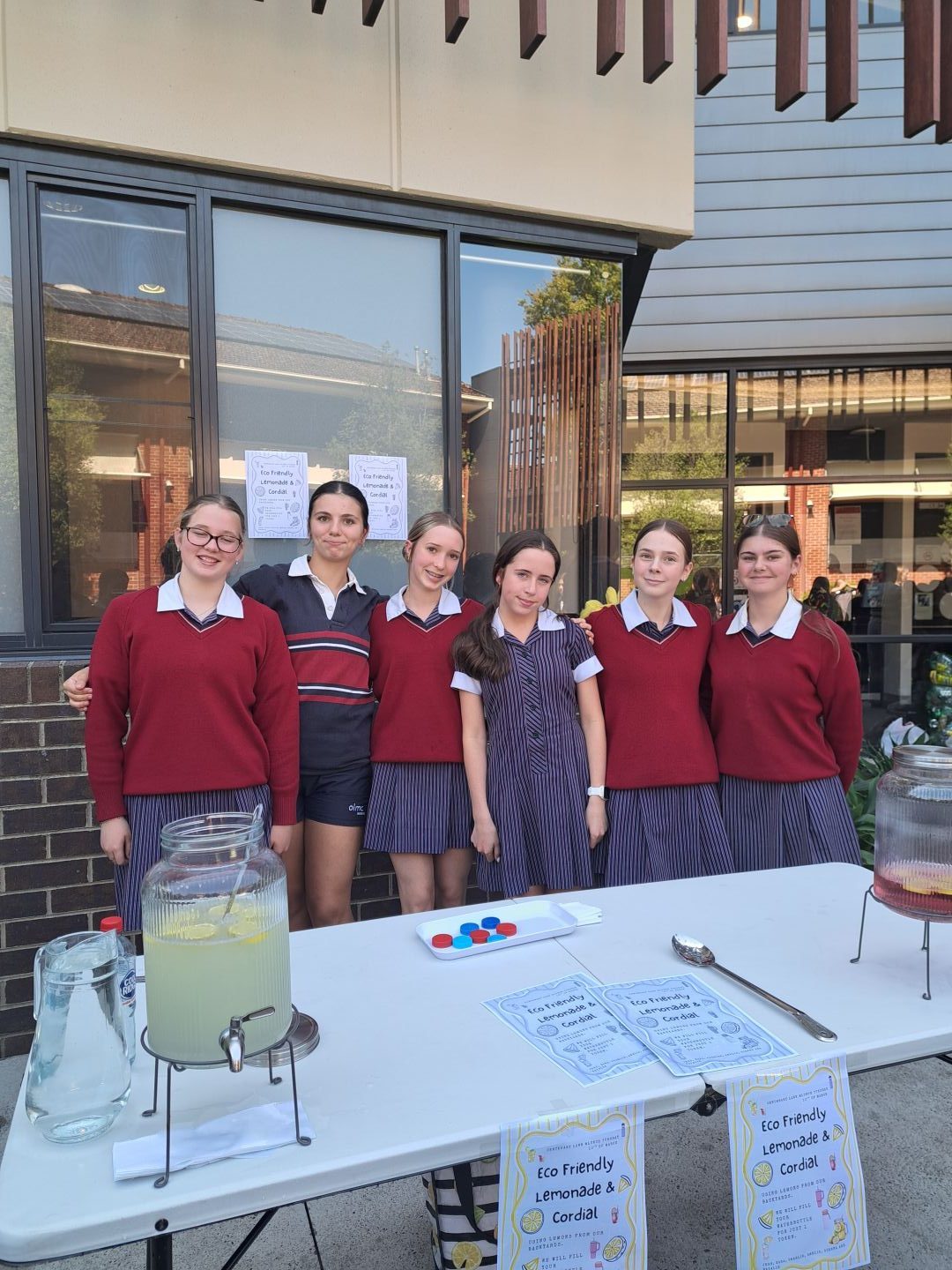
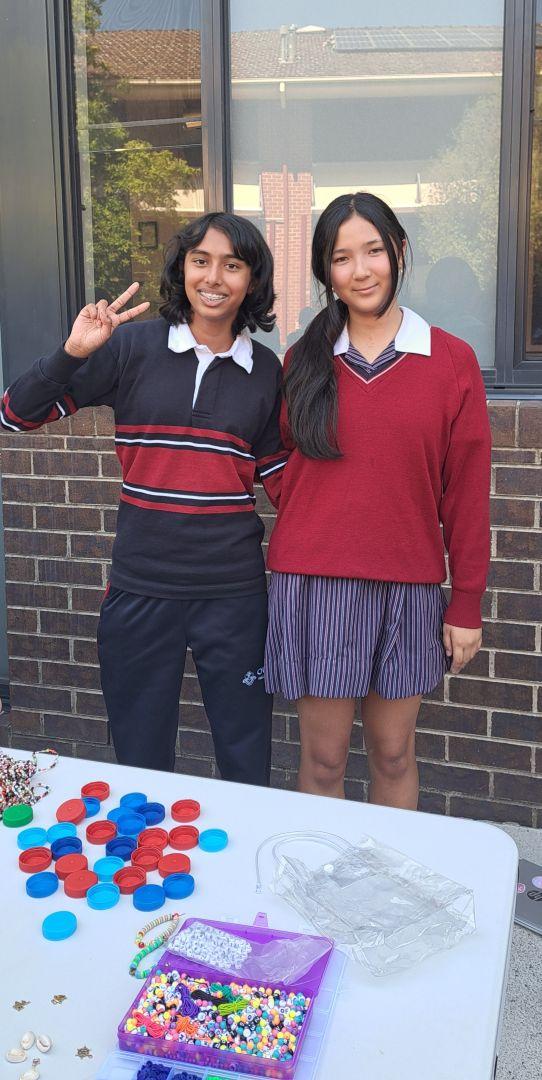
The Year 9s in Horizon planned and ran very successful stalls at lunch to highlight sustainable thinking. In the care for our common home, we need to consider waste and reusing items when we can. We can also have fun without buying new!

Students earned tokens by donating recyclable cans, books, and clothes. They spent their tokens on games, popcorn, drinks, slices and brownies, fairy bread, tote bags, and second hand and crafted jewellery. It was great to see so many drink bottles being brought so that we didn't use any disposable cups.

As always, members of the Social Justice Club supported our event. It was lovely to see the Year 9s organise such a fun event for the Year 7s and 8s to enjoy.

Anita Galli
Social Justice Coordinator


Joanna De Bono
Deputy Principal - Learning and Innovation

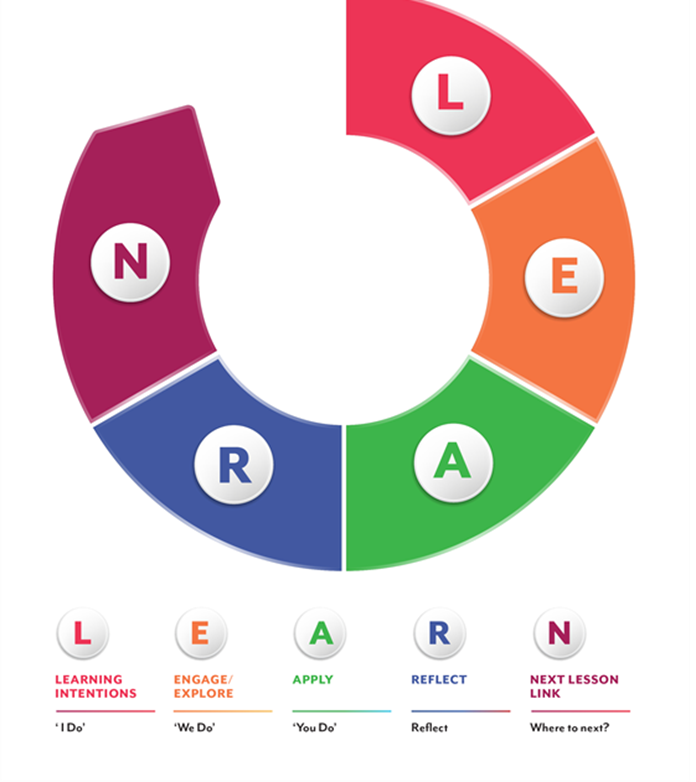
In the previous newsletter the focus of the College Instructional Model was Entry Routines and developing expectations and a positive learning environment where students are ready to learn.

The next stage sets the scene for the lesson by outlining the learning intentions and success criteria.

Learning Intentions and Success Criteria

There is a multitude of research that confirms the value of sharing quality learning intentions with learners that clearly articulates what the teacher wants the students to know, understand and be able to do as a result of the learning. Explicit learning intentions and success criteria has a strong positive impact on student achievement, improving understanding, depth of learning, and the overall quality of work produced.

Learning intentions and success criteria help students recognise how new learning builds on what they already know, improving comprehension, retention, and the ability to make meaningful connections across the curriculum.

Learning intentions and success criteria can provide clarity for our students (Hattie, 2012). A common language of learning ensures that students understand what we are teaching them. Actively using learning intentions and success criteria provides a learning guide for students to answer the three feedback questions proposed by Hattie and Timperley (2007):

  • Where am I going? (What are the goals?)
  • How am I going? (What progress is being made towards the goals?)
  • Where to next? (What activities need to be undertaken to make better progress?)

Learning intentions are brief statements that explicitly describe what students should know, understand and be able to do as a result of the learning sequence. A learning intention clearly outlines what students will be learning rather than what students will be doing. Learning intentions tied to curriculum outcomes ensure that teaching, tasks, questioning, and assessment all work together toward the same learning goal, creating coherent and impactful instructional sequences.

Success criteria are the measurable definitions of success used to determine whether, and how well, learners have met the learning intention. Clear, visible success criteria empower students to reflect on their progress, evaluate the quality of their work, and take greater ownership of their learning journey.

Research indicates that the use of learning intentions and success criteria had an above average effect on the impact of student attainment. In particular, some research has found that not only student understanding increased but the overall quality of work as well.

In addition, when learners know what success looks like for each lesson, they are more likely to reflect, plan and aspire to achieve.

Year 7 Religious Education

This term in Religious Education, our new Year 7 students are learning what it means to belong to our OLMC community. We have been studying our College values of courage, justice, compassion, and joy in our everyday lives and visiting some sacred spaces and artworks around the College. Students are commencing their first assessment on ‘Belonging’ in their Religious Education classes.

Year 8 Religious Education

It has been a busy and enlightening start to the term in our Year 8 Religious Education classes. We have recently embarked on our unit titled ‘Jesus: The Jewish Man.’ While many students come to us with a familiar image of Jesus, this unit shifts the perspective slightly. Rather than viewing him solely through a theological lens, we are exploring his historical and cultural context - examining what it truly meant to live as a Jewish person in the first century.

What We Are Uncovering

To understand the ministry of Jesus, students must first understand the world in which he walked. We are currently delving into:

  • The Political Landscape: The complex tensions between the Roman occupation and local authorities, including the role of the Sanhedrin.
  • Social Groups: Moving beyond the Pharisees and Sadducees to understand the diverse groups of the time, including the Essenes and the Zealots.
  • Daily Life & Customs: What did a first-century household look like? How did Jewish dietary laws, Sabbath observance, and synagogue life shape daily routines?

By examining the New Testament alongside historical evidence, students are learning that Jesus was not a figure operating in a vacuum. He was deeply embedded in the religious traditions and social struggles of his people.

Grace Austin
Religious Education Learning Leader

Science differs from other subjects in that students perform practical experiments which bring theoretical concepts to life, promote deeper understanding and develop essential subject-specific skills. We are fortunate at OLMC to have contemporary purpose-built science laboratories which are well resourced, allowing our students a variety of practical experiences. Our skilled and knowledgeable laboratory technicians, Dr Nathan Nicholas and Mrs Catherine Borstelj, work diligently behind the scenes to ensure that we have the appropriate apparatus and materials to perform these practical activities safely.

There is always a lot of excitement at the start of the year with our Year 7 students beginning their science journey at OLMC. Students learn how to work safely in a laboratory and are introduced to the scientific equipment used. They learn how to conduct experiments using the scientific method and then communicate their findings using the appropriate format for writing practical reports. Although, the greatest highlight in these first few weeks is students successfully obtaining their Bunsen burner licence. Below are a few reflections written by our Year 7 students of their first few weeks in science at OLMC:

'The thing that surprised me the most was wearing the lab coats and safety glasses for all of the experiments. It surprised me because in my primary school we never had to wear the science safety gear, so it was something new and fun. Something else that surprised me was when I got told we had to get our Bunsen burner licence which made me super enthusiastic. I really enjoyed my first day of science because we got to see an experiment when a tea bag was on fire, and it flew up like a rocket. I am most proud of doing my first ever Bunsen burner experiment which was heating water which was very fun and interesting. My journey of obtaining my Bunsen burner licence was very exciting but also a little nerve racking. I never knew how to light a match but eventually I got better at it. I am most proud of being able to get my licence and lighting a match for the very first time.'

Zoey I, 7A (Science Teacher: Ms Breanna Farrugia)

'What has surprised me the most about science is how fun it is getting your hypothesis right. In science, we did more of the practical things like lighting a Bunsen burner. In our first session, we got to observe an experiment with a tea bag that caught on fire. In science so far, I am most proud of achieving my Bunsen burner licence because I didn’t get the steps wrong and remembered all the key details. My journey of receiving my Bunsen burner licence was all during one lesson. I had to research how to light a Bunsen burner and then I was called up to do the process and receive my licence. I almost forgot to wear my safety glasses when I was getting ready for the experiment but then I quickly grabbed them from my desk. I am most proud of achieving my Bunsen burner licence because of how quickly I managed to gain the knowledge of the process of lighting a Bunsen burner.'

Valentina S, 7A (Science Teacher: Ms Breanna Farrugia)

‘What has surprised me most about learning science is all the amazing experiments we get to do and how much interesting information we learn. It is exciting to understand how things work! My first day of science was very interesting and fun because we learned about what we were going to be studying this year. We also learned about Bunsen burners and got our licence a couple of weeks later! So far, I'm really proud of how I have improved my learning in science and stayed focused in class to try and achieve a good grade. I am most proud of achieving my Bunsen burner licence because my hard work during class paid off. Getting my licence made me feel really happy and proud of myself.'

Milana P, 7B (Science Teacher: Ms Breanna Farrugia)

‘Only six weeks into the term and I am really enjoying science. The thing that has surprised me the most is the number of experiments we are doing. I thought it would be mostly reading but we actually test ideas and see results. My first lesson was exciting because we left the classroom and went into a real science lab. We learned about different types of science equipment and the importance of lab safety. What I am most proud of is getting my Bunsen burner licence and then being able to use the Bunsen burner in an actual experiment. It showed that I understood the safety rules and could use the equipment correctly in the science lab. Getting my Bunsen burner licence was an interesting learning experience. First, we learned about the different parts of the Bunsen burner and safety rules we must follow in the science lab. Then we practised how to set it up and light it safely. After showing that we could follow the safety steps correctly, we were able to earn our Bunsen burner licence. I'm most proud that I learnt how to safely light a Bunsen burner using matches and understand the difference between the yellow safety flame and the blue heating flame.'

Kiara W, 7C (Science Teacher: Mr Hemantha Devendra)

‘I am most proud of myself because I know how to use the equipment safely and I know that I can always follow all safety rules while being in a lab. I know all the steps to correctly use a Bunsen burner. I also think lighting the Bunsen burner is a very fun activity to do with friends in a classroom. Now that I have my Bunsen burner licence, I know all the rules I will need to follow, and I am very proud of myself for achieving this.'

Siena T, 7C (Science Teacher: Mr Hemantha Devendra)

‘The day we earnt our Bunsen burner licences was great! In the lessons leading up, we learned all about lab safety and the correct precautions when near a flame. Soon enough, the day came and we got to light our Bunsen burners. It was heaps of fun, bringing the matches to the head of the barrel, then seeing our Bunsen burners alight, knowing that we had lit them ourselves.'

Zara T, 7C (Science Teacher: Mr Hemantha Devendra)

‘Last week my class and I attempted to receive our Bunsen burner licence. Everyone did it so well and eventually it was my turn. I was horrified to even light a match! It took me so long to gain the confidence to light one and even when I attempted my head and body were miles away from the actual match. In the end, I was able to light it with pure confidence. Then came the true fear of lighting the actual Bunsen burner. Just the sight of the burning flames in my eyes gave me goosebumps. After multiple attempts with lighting it, I could do it. It was such a small moment, but it was a very incredible feeling.'

Mia G, 7C (Science Teacher: Mr Hemantha Devendra)

‘The thing that surprised me most about science in Year 7 is that the labs have things like an eye wash, fire extinguisher and blanket and an emergency shower while in primary school the only thing from that list that we had was the fire extinguisher. My first science lesson at OLMC was the short test we did for safety while using a Bunsen burner and at the end of that lesson I also received my Bunsen burner licence. The thing I am most proud of in science so far is completing my first science 3-part task on the temperature of different amounts of water after 10 minutes.'

Billie D, 7D (Science Teacher: Ms Nicole Kellam)

Our Year 8 students have started the year with the biology unit ‘Cells and Body Systems’. During this time, they have learnt how to use a light microscope and viewed microscope slides of various specialised animal and plant cells. Students studied a variety of animal skulls from our extensive collection including a saltwater crocodile, red kangaroo, koala, thylacine, platypus, possum, and wombat just to name a few. The aim of this activity was to determine the relationship between the physical features of teeth in herbivores, carnivores, and omnivores and their corresponding diet and digestion. When examining the role of enzymes in chemical digestion, students completed an experiment investigating the effect of amylase on the breakdown of starch.

‘Unlocking the Atom and Chemical Reactions’ is the unit of chemistry we commenced with at Year 9. Students have learnt about the atom structure of different elements and their subatomic particles using the Bright Atom modelling kits. They investigated Niels Bohr’s energy shell model by examining the flame colours emitted by a range of metal salt compounds. Using their results, students determined which metal salt was present in a common household chemical, cream of tartar. Students also performed a variety of chemical reactions summarising these as word and chemical equations after carefully observing the products obtained.

Year 10 students began this year with a biology unit ‘Genetics and Bioethics’. When learning about DNA students were able to examine our large 3-dimensional molecular models giving them a deeper understanding of its double helix structure and how the nucleotides are arranged. This hands-on model was enhanced by students extracting actual DNA from strawberries. Students also viewed animal and plant cells undergoing the two different types of cell division using light microscopes.

On Thursday 5 March our VCE Physics Teacher Ms Jocelyn Weterings organised for our Year 12 students to attend Luna Park’s VCE Physics Day. Students experienced practical examples of concepts covered in ‘Motion’ in Unit 3 of the Study Design through a variety of amusement rides. The following reflection by Aprila D (12 MA6) describes the highlights of this engaging and informative experience:

‘Recently, the Year 12 Physics class visited Luna Park for an exciting excursion that combined fun with hands on learning. While the rides were thrilling, they also helped us experience the physics concepts we have been studying in class.
A key concept in the topic of motion in which we have been studying is circular and projectile motion. We explored these through our excursion to Luna Park. We investigated the centripetal force, the force that keeps an object moving in a circular path. Many of the rides allowed us to physically feel this force as we moved through loops and turns, like the Ferris Wheel, the Twin Dragon and the Enterprise.
The rides also demonstrated how our sense of apparent weight changes during circular motion. At different points in a loop, the relationship between gravity and the normal force from the seat changes. At the bottom of the ride we feel heavier because the seat pushes on us more strongly, while near the top we feel lighter as gravity helps provide the centripetal force.
By experiencing these forces firsthand, we were able to connect the equations and theories that we learn in the classroom to real life situations. The excursion showed us that physics is not just something we calculate, but instead it is something we can actually feel and observe in the world around us.’

I would like to thank all members of the Science team for their commitment and enthusiasm in ensuring our students had a positive start to 2026, and for the engaging opportunities they provide to make science learning meaningful and memorable.

Assimina Semertjis
Science Learning Leader

Health and Physical Education is off to an excellent start in Term 1. This term offers engaging and diverse learning experiences in Health and Physical Education for students in Years 7–9.

Year 7
PE classes focus around striking and fielding. Kickball, Softball and Teeball are part of the rotation. In Health, students have been exploring nutrition and will be beginning an assessment task which involves planning and cooking meals for family members.

Year 8
Students have started off with invasion games such as Aussie Rules, Soccer and Touch Rugby. In Health, students have been learning all things First Aid. This includes learning DRSABCD, common injuries, camping scenarios, and applying the content practically using first aid manikins.

Year 9
Whilst two classes are off on Horizon, the other Year 9 classes have been focusing on fitness. This has involved them learning fitness content in Health classes such as training principles and methods, and then applying their knowledge by participating in fitness testing and writing up their own program to improve their fitness.

We look forward to continuing this positive start to the year.

Nathan Watson
Health and Physical Education Learning Leader

On Tuesday, our Year 8 cohort brought energy, enthusiasm and plenty of healthy competition to our Pastoral vs Pastoral Mat Ball afternoon during our lesson 3 pastoral lesson.

Each pastoral group not only competed fiercely (and fairly!) on the court, but also took on the challenge of creating a class cheer. Some of the cheers were outstanding and full of team spirit. It was fantastic to see every student getting involved, whether playing, cheering from the sidelines, or proudly performing their group chant.

What stood out most was the way students supported one another. The encouragement, fair play and genuine excitement were wonderful to witness. Spirits were certainly high, and not just because students had permission to wear their PE uniform for the day.

A huge thank you to our dedicated Year 8 Pastoral Leaders for supervising and supporting the event. In particular, we are incredibly grateful to our four PE superstar pastoral leaders who ran the competition and umpired the games. Events like this don’t happen without the time and care of staff who are willing to make them possible.

It was a terrific afternoon of connection, pastoral pride and Year 8 spirit. We look forward to the next showdown!

Felicia Taine
Year 8 Level Coordinator

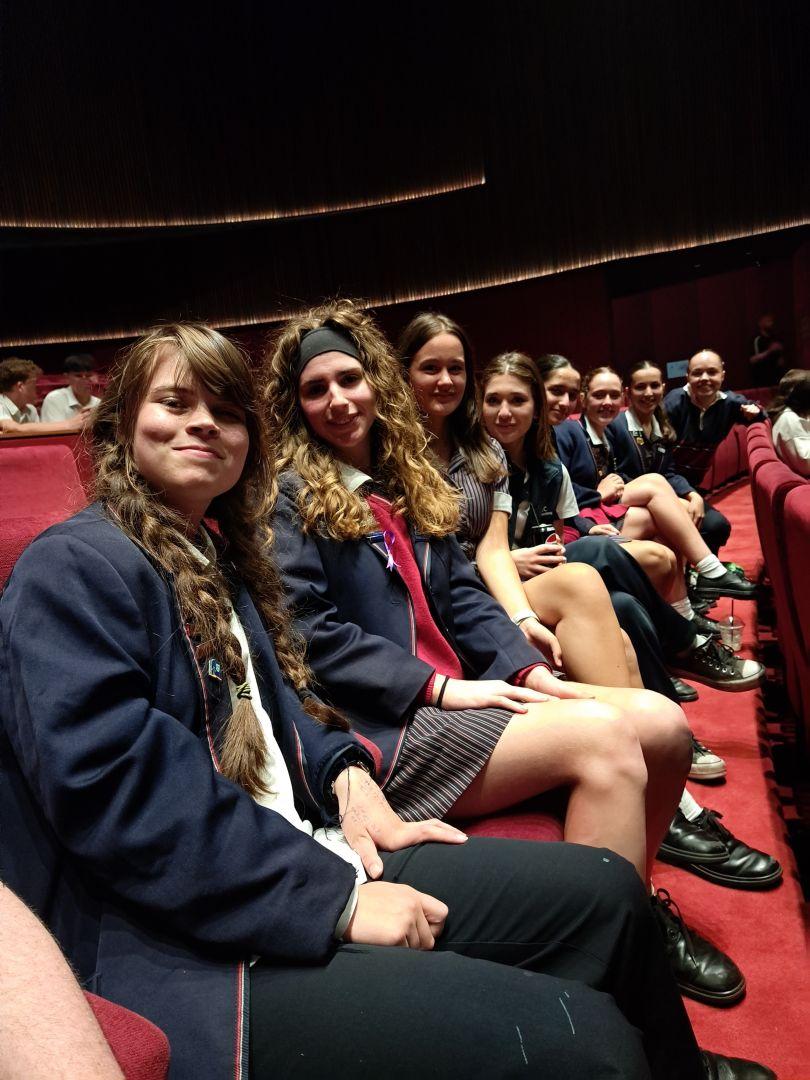
Last week, our Year 12 Drama students attended a performance of Robot Song at The Round. This powerful Australian work is included on the VCE Drama Playlist prescribed by the Victorian Curriculum and Assessment Authority (VCAA), making it an important live theatre experience for our students as they prepare for both their analysis SAC and end-of-year written examination.

Robot Song is an award-winning production by Jolyon James that tells the story of 11-year-old Juniper May. After being bullied and presented with a petition declaring her 'the most hated person in the school,' Juniper retreats from the world — refusing to eat and refusing to return to school. Through music, imagination and unconditional love, Juniper ultimately finds her voice and begins to define herself on her own terms.

The production explores themes of difference, belonging and inclusion. The work invites audiences to consider empathy, resilience and the power of creativity in navigating a world that can feel rigid or unkind, a wonderful message for all.

The students were particularly engaged by the innovative production style, which combined live performance with digital technology, animation and puppetry. I would also like to commend our Year 12 Drama class for their outstanding theatre etiquette. They represented the school beautifully, engaging thoughtfully with the performance and demonstrating exemplary behaviour throughout the excursion.

Experiencing live theatre is an invaluable part of Drama education, and Robot Song provided both an emotionally resonant story and an excellent foundation for the analytical work students will now undertake in class.

Felicia Taine
VCE Drama Teacher

The Learning Commons is busy throughout the week with lunchtime clubs and activities on offer for students. All students are welcome to join in at any stage as there are a range of competitions happening throughout the year too. The current schedule includes:

  • Creative writing - Tuesday
  • Craft Club - Wednesday
  • Games Club - Thursday
  • Book Club - Friday (fortnightly)

In addition to lunchtime activities, students are also encouraged to use Homework Club which is on offer in the Learning Commons after school. Homework Club is for junior students (Years 7-9), Mondays and Tuesdays 3:30 - 4:30 pm. Students can receive assistance with their homework or classwork, study for upcoming assessments or receive tips to help them with their organisation from OLMC Learning Support staff. No bookings are required.

Anna Apfelstedt
Learning Commons Coordinator

Applications for the Camps, Sports and Excursions Fund (CSEF) 2026 are now open and remain open until the end of Term 2 - Friday 26 June 2026.

Parents/Legal Guardians holding a Concession Card and being successfully validated with Centrelink will be entitled to a payment of $400 per year for each Secondary School student.

Parents, please refer to the 2026 Camps, Sports & Excursions Fund (CSEF) Application Form attached.

Please complete this application and return it as soon as possible to Visitor Reception at OLMC along with a photocopy of your relevant Concession Card.

OLMC College Tours

Bookings for 2026 Tours are now open.

Prospective families are invited on a tour of the OLMC facilities followed by an information session with Principal Judith Weir, Transition Coordinator Rowena Thomson and two students.

BOOK NOW

Follow the official Our Lady of Mercy College accounts on Facebook, Instagram and LinkedIn. We’ll be sharing regular news, student achievements and stories from around the College.