


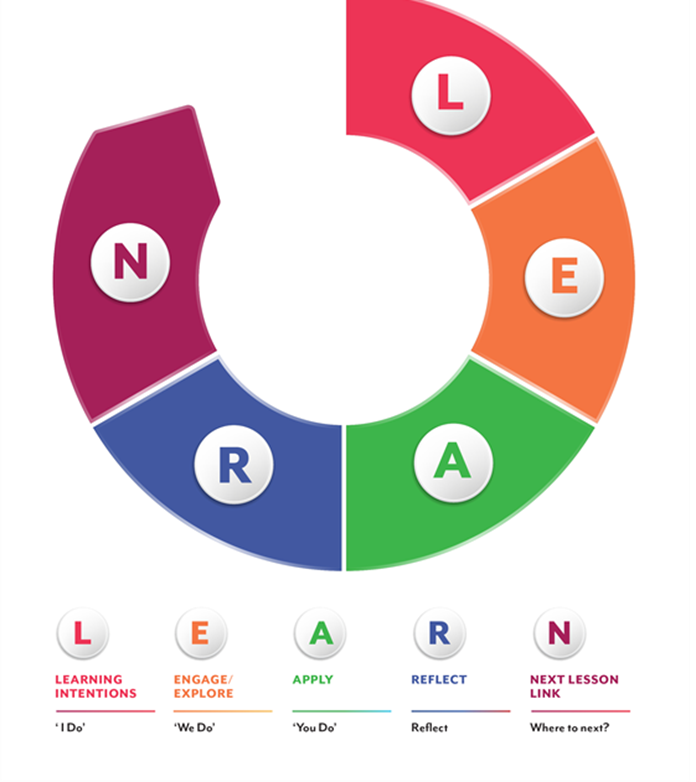
In the previous newsletter the focus of the College Instructional Model was Entry Routines and developing expectations and a positive learning environment where students are ready to learn.
The next stage sets the scene for the lesson by outlining the learning intentions and success criteria.
Learning Intentions and Success Criteria
There is a multitude of research that confirms the value of sharing quality learning intentions with learners that clearly articulates what the teacher wants the students to know, understand and be able to do as a result of the learning. Explicit learning intentions and success criteria has a strong positive impact on student achievement, improving understanding, depth of learning, and the overall quality of work produced.
Learning intentions and success criteria help students recognise how new learning builds on what they already know, improving comprehension, retention, and the ability to make meaningful connections across the curriculum.
Learning intentions and success criteria can provide clarity for our students (Hattie, 2012). A common language of learning ensures that students understand what we are teaching them. Actively using learning intentions and success criteria provides a learning guide for students to answer the three feedback questions proposed by Hattie and Timperley (2007):
- Where am I going? (What are the goals?)
- How am I going? (What progress is being made towards the goals?)
- Where to next? (What activities need to be undertaken to make better progress?)
Learning intentions are brief statements that explicitly describe what students should know, understand and be able to do as a result of the learning sequence. A learning intention clearly outlines what students will be learning rather than what students will be doing. Learning intentions tied to curriculum outcomes ensure that teaching, tasks, questioning, and assessment all work together toward the same learning goal, creating coherent and impactful instructional sequences.
Success criteria are the measurable definitions of success used to determine whether, and how well, learners have met the learning intention. Clear, visible success criteria empower students to reflect on their progress, evaluate the quality of their work, and take greater ownership of their learning journey.
Research indicates that the use of learning intentions and success criteria had an above average effect on the impact of student attainment. In particular, some research has found that not only student understanding increased but the overall quality of work as well.
In addition, when learners know what success looks like for each lesson, they are more likely to reflect, plan and aspire to achieve.