


The LEARN Instructional Model
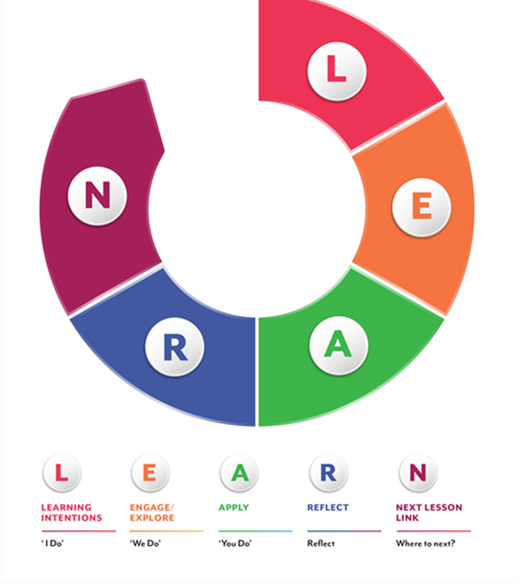
The LEARN Instructional Model is a strong feature of the OLMC Learning and Teaching focus. The fundamental basis of this strategic framework is that classroom environments that enable students to focus on and engage with lesson content provide an important foundation for learning success. Routines support students in being ready to engage and can facilitate their learning.
With clear routines, students understand and are more able to demonstrate what is expected of them. Routines also ensure students know what they can expect from their teacher during the learning process, and how actively participating will help them achieve their goals. The experience of predictability and safety in a learning environment that includes routines contributes to positive relationships and learning success.
Key points from the research
• Overloading working memory with inconsistent expectations and environmental distractions can interfere with learning by hindering the transfer of information to long-term memory.
• Rules and routines structure the learning environment, helping to manage cognitive load with a consistent and predictable approach to support students’ focus, engagement and efficient information processing.
Their efficient, productive and automatic execution reduces wasted learning time and helps free up students’ working memory to focus on learning.
• To create safe learning environments, rules and routines should reflect culturally responsive and inclusive practices.
• Routines that target different aspects of the learning process support students in being ready for and successful in their learning, enhance self-efficacy and increase motivation and effort. They can also be used to express shared values, norms and aspirations, such as routines for celebrating success, recognising positive effort in learning and providing constructive feedback.
Understanding this practice
These examples demonstrate what establishing and maintaining rules and routines might look like in the classroom, and potential misapplications in practice.
What it is:
- Rules and routines are aligned with school-wide processes for consistency and predictability, and used across the school so students know what is expected of them and what they can expect from their teachers.
- A consistent and predictable approach to the way tasks and activities are completed and lessons are structured, so students can focus on the content of their learning.
- A small number of rules and routines designed for simplicity, explicitly taught and practised so students can develop automaticity and focus on their learning.
- Rules and routines that are responsive to students' needs and how students learn, to support them in achieving learning success.